Sometimes, you do not realize how much of yourself you have given away until you try to take a little of it back.
You notice how carefully you choose your words around someone you love, rehearsing a simple conversation in your head because you already know which parts might upset them. You say yes when you mean no. You let a comment pass that hurt more than you want to admit. You explain yourself long after you have made your point, hoping that if you find the right words, they will finally understand why something matters to you.
Little by little, you become an expert at keeping the peace, even when the peace you are keeping comes at your own expense.
I know what it feels like to drain yourself trying to be everything for everyone. To keep showing up, keep giving, keep trying to meet the needs around you, believing that if you could just do enough, you could hold everything together. Somewhere in that effort, I lost sight of myself. I had spent so much time becoming what everyone else needed that I had become no one to me. Eventually, I had to confront the girl staring back at me in the mirror and ask myself when I had stopped making room for her.
The difficult part is that we can lose ourselves while doing things that look like love. We remember the good moments, the people who matter to us, and the relationships we would never want to lose. We do not want to become selfish or unkind. We simply want the people we love to be happy, and sometimes we confuse their happiness with our responsibility.
Yet there is a difference between compromise and sacrifice.
Compromise asks us to make room for another person. Self-abandonment asks us to keep making ourselves smaller so there is room for everyone else. Healthy relationships involve give and take, difficult conversations, and moments when neither person gets exactly what they want. The difference is whether both people are making room for each other, or whether one person is consistently expected to absorb the discomfort.
Boundaries help us recognize that difference. They define what we can accept, what we need, and how we will respond when something crosses a line. They are not a way to control another person’s choices; they clarify our own. A boundary might mean saying no without a lengthy defense, asking for a hurtful pattern to change, or stepping away from a conversation that has stopped being respectful.
Boundaries matter because love alone does not make every relationship healthy. Caring about someone does not automatically give us the skills to communicate well, respect differences, or take responsibility for the impact of our actions. Without boundaries, resentment can quietly replace generosity, exhaustion can masquerade as devotion, and we can begin to resent the very people we have been trying so hard to please.
Not everyone will respond well when you begin to change a dynamic that has always worked in their favor. Someone may call you selfish when you stop saying yes to everything. They may tell you that you have changed, as though becoming more honest about your needs is a betrayal of who you used to be.
Perhaps you have changed, or you are finally allowing yourself to.
You can love someone and still recognize that a relationship is hurting you. You can understand why someone behaves the way they do without accepting the consequences of their behavior indefinitely. You can forgive someone without agreeing to repeat the same experience.
The hardest part may be accepting that someone can misunderstand your boundary, even when you communicate it with care. We cannot guarantee that honesty will be received kindly, any more than we can guarantee that loving someone well will make them treat us well in return.
What we can do is stop making our own disappearance the condition for someone else’s comfort.
There is a particular tenderness in learning to stay connected to yourself while loving another person. It means recognizing that your needs matter even when they inconvenience someone, that your feelings deserve consideration even when another person disagrees, and that you are allowed to be a whole person inside a relationship.
You do not have to stop loving someone to stop accepting what hurts you. You do not have to turn them into a villain to acknowledge that something between you needs to change. Sometimes, love means finding a healthier way to stay. Sometimes, it means accepting that the relationship cannot continue in the same way.
Either way, you deserve to recognize yourself in the life you are living. You were never meant to disappear just to prove that you love someone.
So ask yourself: Where in your life have you been calling it love when, somewhere along the way, it became leaving yourself behind?
If you’re beginning to explore that question, my Setting Boundaries Workbook offers a space to reflect on your needs, recognize patterns, and practice expressing boundaries with greater clarity. You can work through it at your own pace, wherever you are in the process of finding your way back to yourself.
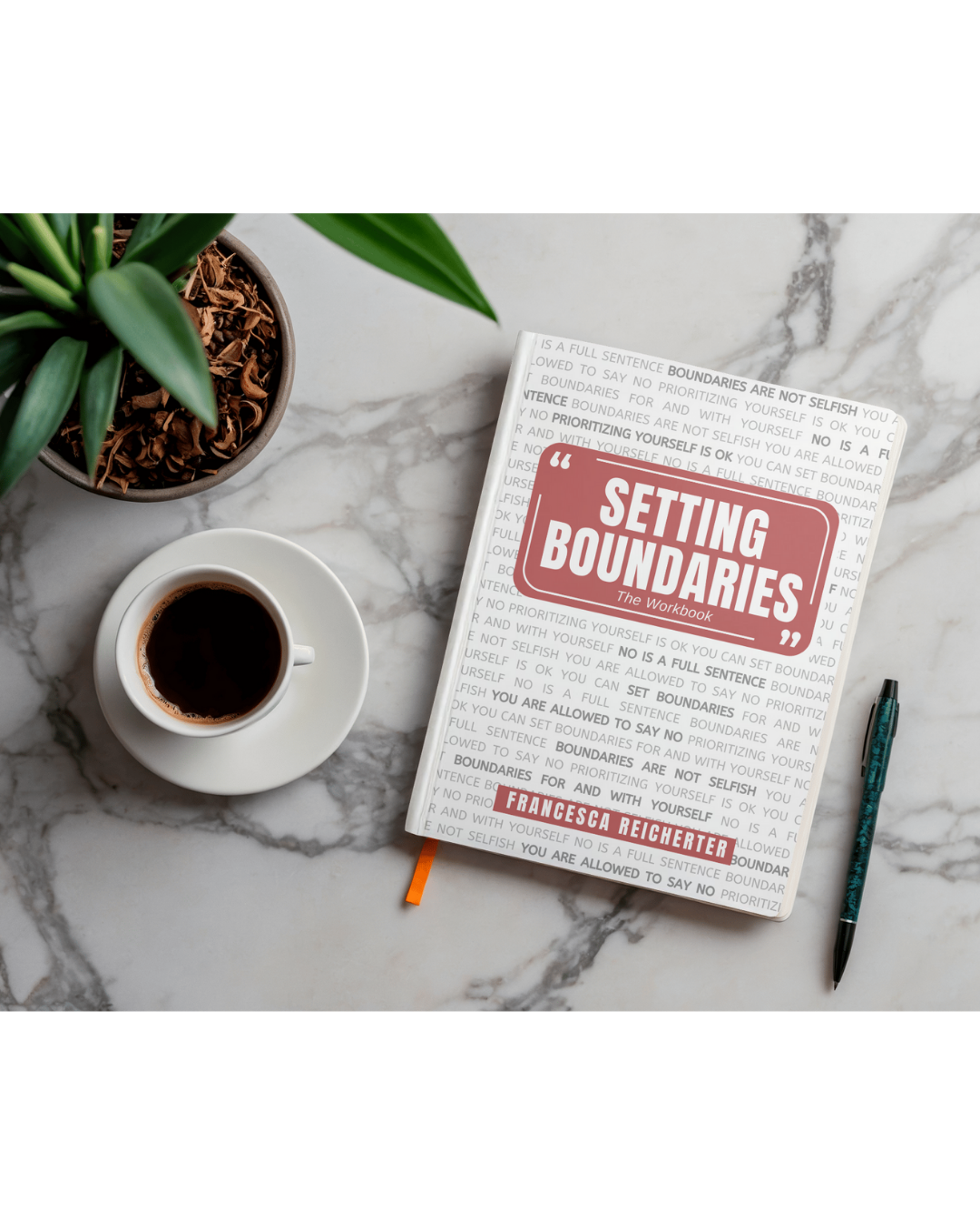
Boundaries aren’t walls. They’re a way to stay connected to yourself while building healthier, more respectful relationships with others.
Setting Boundaries © was created to help you understand what boundaries are, why they matter, and how to communicate them with clarity and compassion. This workbook gently walks you through both internal and external boundaries—helping you feel safer, more grounded, and more confident in your daily life.
Rather than pushing people away, this workbook helps you invite peace, honesty, and balance into your relationships.
What’s Inside
Practical tools to help you build boundaries that support your well-being:
Clear explanations of what boundaries are and how they show up in everyday life
Guided exercises for identifying internal and external boundaries
Language and reflection prompts to practice saying no with kindness and confidence
Activities to help protect your time, space, and emotional energy
Exploration of eight types of boundaries: communication, digital, emotional, environmental, mental, physical, spiritual, and time
From Francesca Reicherter
When I wrote Setting Boundaries ©, I was learning that love without limits becomes exhaustion. I used to believe that saying “yes” was kindness—until I realized that protecting my peace was necessary for healthy connection.
This workbook is for anyone who struggles to speak up, feels overwhelmed by obligations, or wants to build relationships rooted in respect rather than resentment. Because when you set boundaries, you don’t lose people—you lose resentment. What remains is honesty, clarity, and freedom.
With love, strength, and hope,
Francesca
Part of the Growth Path and the Support Path. This workbook focuses on protecting your time, energy, and relationships through clear and compassionate boundaries.
Finding Your Voice
Once boundaries are in place, I AM © helps you build confidence in expressing your needs and asking for support.