Every Piece of You Belongs at the Table
I grew up learning how to hide the pieces of myself that were struggling. I got pretty good at showing people the version of me that was functioning, smiling, getting things done, and trying to be okay while keeping the parts that were hurting, confused, scared, angry, or overwhelmed much further beneath the surface.
Then I ended up in a psychiatric unit, and suddenly I couldn’t hide those pieces anymore. I was forced to confront parts of myself that I had spent years trying to avoid, but I didn’t know what to do with them. I didn’t have the language to understand everything I was feeling, the tools to process what was happening, or a framework for figuring out how those pieces could eventually help me grow. I just knew there were a lot of pieces of me sitting there, and I didn’t know how they fit together.
I wish I had the tools back then to learn how to explore who I was without having to pretend to be okay in the midst of it all. I spent so much time after I was discharged waiting for someone else to tell me that I was going to be okay. Eventually, I had to start learning how to give myself some of those messages, too. And, it changed my life.
So, I started encouraging others to do the same, and then to take it a step further and give it to someone else (chances are they may need that message too). And overtime, I’ve watched people do exactly that.
One Monday, while playing Pieces of You, we pulled a card with prompt “What do you need to hear right now?” And, the activity asked us to turn that message into a card for someone else.
One person wrote, “Keep smiling and keep going. It is okay to make mistakes. You are going to get through this and have brighter days.” That message came from a homeless veteran.
Another simply wrote, “You are doing a great job. Don’t give up.”
One young adult who hopes to become a nurse wrote, “Don’t give up. Things may be looking a certain way right now, but you don’t know what the future holds. You can create the life you want. You just have to get through this moment and you will. I have faith in you. If you don’t right now, use my faith. I believe in you. And if no one has told you today, I love you.”
Another person wrote, “You are loved. You are worth it. When things get tough, just remember that this is temporary. You can get through this. Nobody is perfect, and it’s okay to be yourself because you matter.”
Someone else wrote, “There is wonder in growth. There is beauty in intuition. There is room for mistakes, regrowth, and determination. There is always someone who understands you. Never place yourself away from the sun. You are strong, intelligent, and nearly unbreakable.” That message came from someone who had survived domestic violence and experienced homelessness while escaping that situation.
Pause and think about these messages for a moment. All of these individuals who are actively in the middle of their own difficult times are using their experience to write a message to help someone else survive theirs.
We all have pieces of ourselves that we don’t know what to do with sometimes. The part of you that feels angry, scared, disconnected, or unsure, the part that doesn’t trust people anymore, the part that made a mistake you’re still carrying, or the part that desperately wants to be loved but doesn’t know how to ask for it.
Healing doesn’t mean getting rid of the parts of ourselves we don’t like. It’s about learning to understand them, make space for them, and figure out what they need. That’s what I wish I had been taught when I was in that psychiatric unit. I wish someone had helped me ask, “What is this part of me trying to tell me? What does it need? What can I learn from it? How can I take care of it?”
Instead, I only learned how to survive. I needed something beyond survival. I needed a way to understand myself, and I needed a safe place to practice doing that.
That’s the space I wanted Pieces of You to create.
It’s a space where you don’t have to hide the messy parts. You can discover something about yourself while learning something about the person sitting next to you. You can be vulnerable without having to tell everyone everything. Sometimes vulnerability is simply answering one question honestly or writing down something you need to hear.
I’ve had people tell me that Pieces of You helped them feel connected, supported, and seen. One patient told me it was one of the best groups they had experienced during their recovery journey. Another said it helped even the most reluctant people participate and share.
Those comments mean a lot to me, but what matters even more is what happens around the table. When someone picks up a card and writes, “You are worth it,” they’re not just creating a message for someone else. They’re practicing believing it themselves. When someone writes, “Don’t give up,” they’re putting hope somewhere they can see it. When someone writes, “It’s okay to be yourself,” they’re giving themselves permission to stop hiding.
That’s what I wanted Pieces of You to be. Not a game that tells you who you’re supposed to become, but a space that helps you discover who you are, including the pieces you’ve been afraid to look at.
Because every piece of you belongs at the table, even the parts you don’t understand yet.
You don’t have to hide pieces of yourself to be worthy of belonging. Sometimes you just need a safe enough space to finally let them be seen.
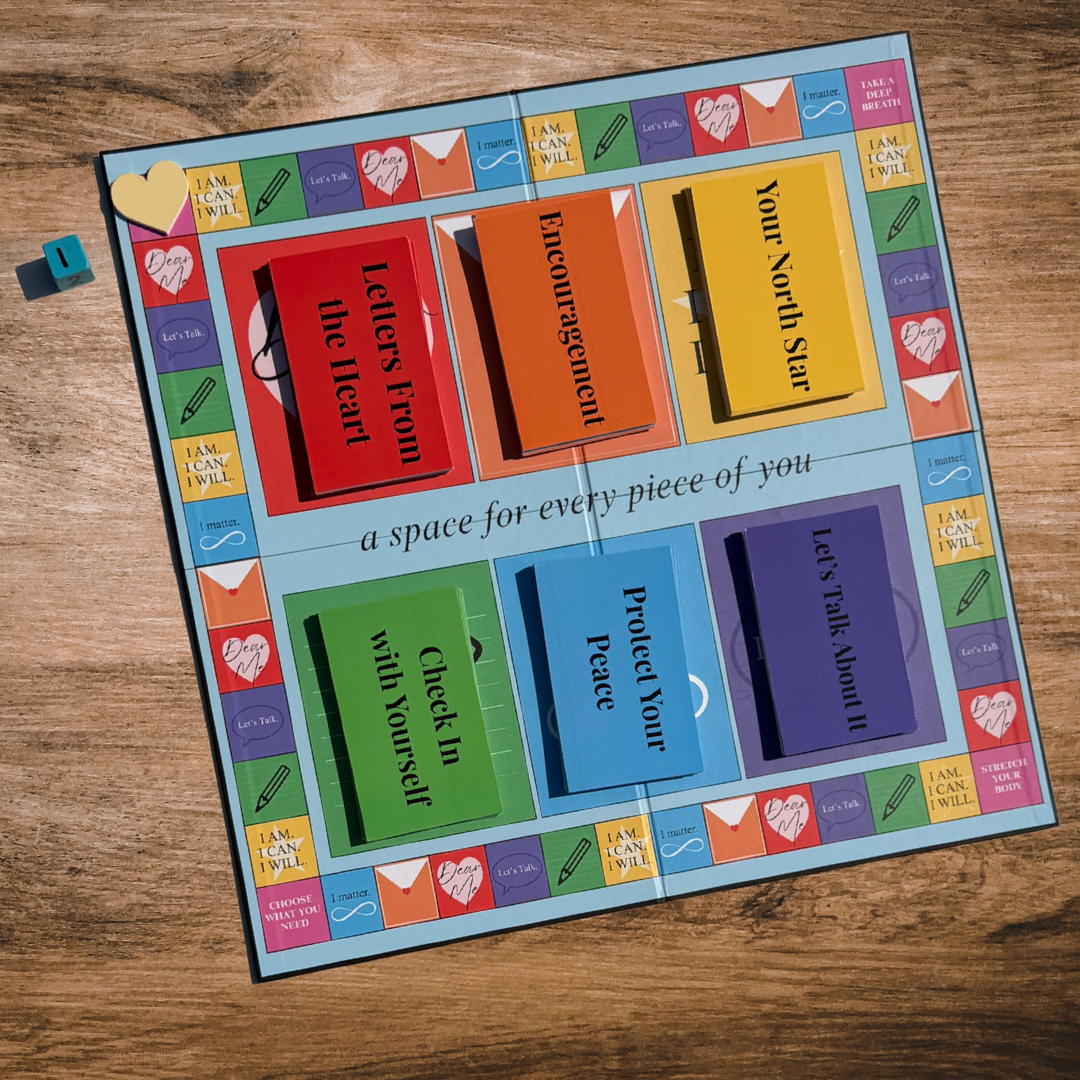
Pieces of You™ is more than a board game; it’s an opportunity for every individual at the table to discover a tool that supports their inner journey. The game contains 6 categories filled with different prompts that invite you to write a letter to yourself, make a card for someone else, write down a value or goal, do a journal prompt, share a self-care or boundary out loud, or lead a group discussion. Each category touches on both different themes and different approaches to exploration.
The Guided Edition is designed for treatment centers, therapy groups, and mental health programs. It combines structured prompts with interactive activities to increase engagement, participation, and peer connection in group settings. It’s the group activity that is actually meant for every member of the group.
This game can be incorporated into a variety of settings, including, but not limited to:
therapy groups
counseling sessions
individual reflection
structured therapeutic activities
Recommended Ages 16+
Learn More: Pieces of You: The Guided Edition — Francesca Reicherter
Product Ships in 4-6 weeks!
© 2026 Pieces of You — All rights reserved. TM Pieces of You™ — Pending USPTO registration.
Disclaimer: Pieces of You™ is a reflective and discussion-based board game designed to foster self-expression, connection, and personal insight. It is not a form of therapy, treatment, or clinical intervention and is not intended to replace professional mental health care. The game was created by a facilitator, not a licensed therapist, and should only be used as a therapeutic tool under the guidance of a licensed mental health professional. Players should use the game at their own discretion and seek professional support if needed.