What We Talked About in Pieces of You This Week: Grief, Healing & Learning to Ask for Help
I’m going to say something unbelievable: Mondays are my favorite day of the week.
Every Monday, I have the privilege of playing the board game I created, Pieces of You: Guided Edition, at DiDi Hirsch Excelsior House. I’ve been facilitating it there for almost a year now, and every single time, I walk away reminded of how much people are carrying beneath the surface that rarely gets talked about.
So often, it is because no one has ever stopped to ask, “How are you, really?” No one has opened the kind of conversations that lead to deeper reflection, honesty, and, for many, feeling truly heard and seen for the first time.
What I love most about this experience is how quickly people move beyond surface-level answers. Within minutes, conversations shift from “I’m fine” to what people are actually holding onto, grieving, avoiding, or trying to understand about themselves. I answer honestly alongside the patients every time because I want them to know I genuinely understand and that this is a safe space to be honest with yourself and share whatever you feel comfortable sharing with the group.
Yesterday, the game started by landing on an orange card right away, which meant we began with encouragement cards. The prompt asked, “What affirmation or phrase gives you strength?”
I always love this question because everyone’s answer is different, but you quickly start to hear what people are trying to remind themselves of in the middle of hard seasons. The words we repeat to ourselves usually tell a story about what we are fighting through.
What makes this part even more meaningful is that at the end of the game, I redistribute the encouragement cards so everyone leaves with words written by someone else in the room. A reminder to hold onto whether they read it today, tomorrow, or five years from now that someone else out there understands, believes in them, and wants them to keep going.
After that, we rolled the dice and let the game guide the conversation.
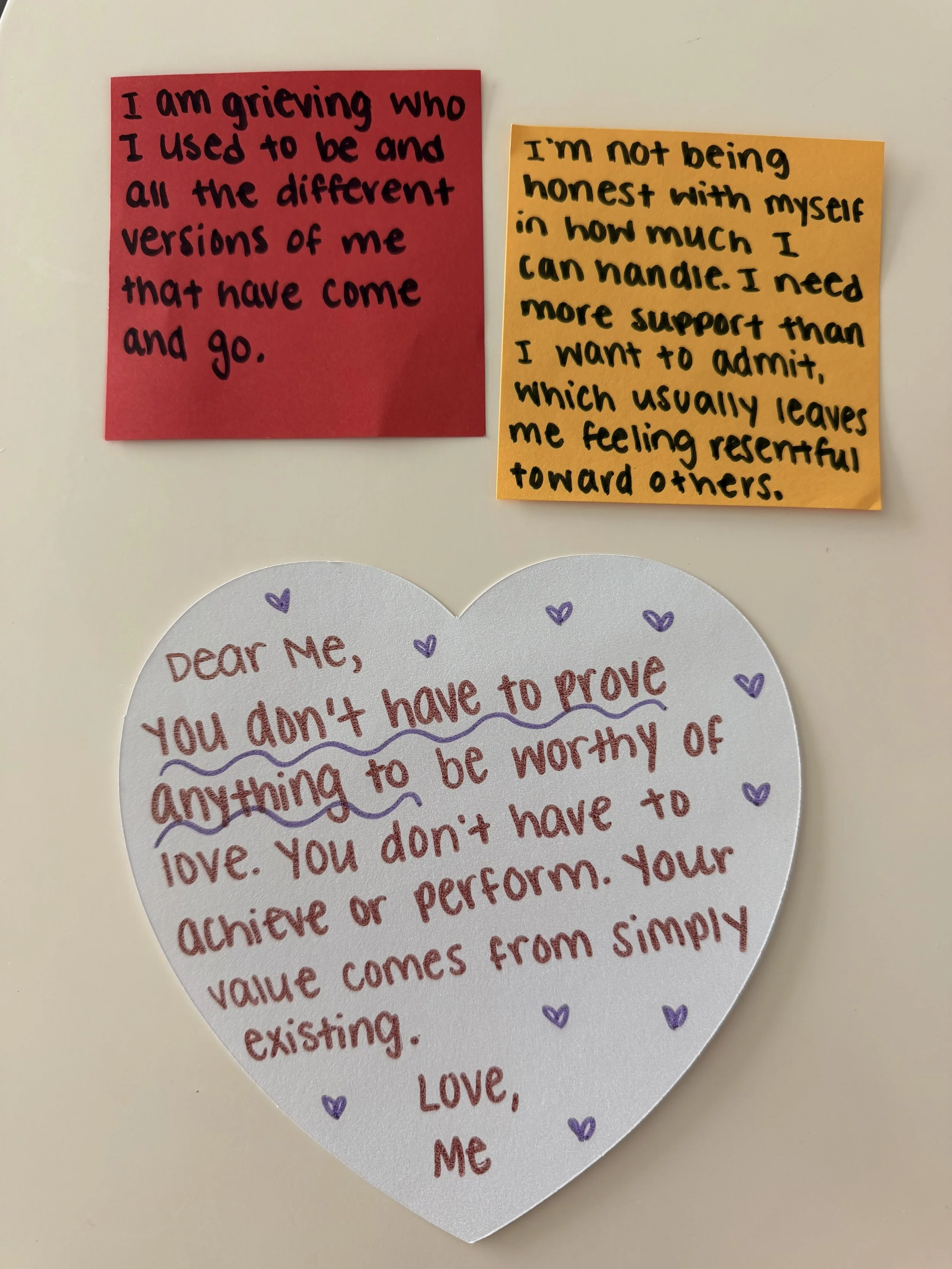
My responses to this week’s prompts.
One of the journal prompts that came up was, “Where are you not being honest with yourself?”
That question opened the door to a really powerful discussion. A lot of people reflected on not being honest about how much they are actually carrying, how overwhelmed they feel, and how often they convince themselves they should be able to handle everything alone even when they are struggling.
We talked about how uncomfortable asking for help can feel and how exhausting it is to pretend we are okay when we are not. Sometimes being honest with ourselves means admitting we need support before we completely burn out.
There was also a lot of conversation around living on the streets, struggling with substance use, wanting help but not knowing where to get it, or questioning whether they were even worthy of receiving support in a world that can feel full of judgment and condemnation.
Another journal prompt asked, “What are you grieving?”
Something that came up over and over again was grief around old versions of ourselves. Grieving who we used to be before mental health struggles, before substance use, before trauma, or before life became heavier than we expected it to be.
There was grief around losing parts of ourselves, the versions that felt more hopeful, carefree, confident, or connected. We talked about what life looked like when dreaming felt easier and support felt closer. We reflected on how many different lives it feels like we have lived and what it is like when relationships change, and we no longer fit into friendships or family dynamics the way we once did.
I do not think we talk enough about this kind of grief. Sometimes healing looks like grieving the version of yourself you miss while learning how to care for and accept the person you are becoming.
One of the heart prompts said, “Dear me, you don’t have to prove anything to…”
That question deepened the conversation. The conversation naturally turned to worthiness and how many of us spend our lives trying to prove we deserve love, acceptance, care, forgiveness, or belonging. We try to prove we are successful enough, healed enough, productive enough, or “good” enough.
But one of the biggest takeaways from the group was this idea that maybe we do not have to prove anything to be worthy of love in the first place.
After the game, one player shared feedback that really stayed with me:
“I felt connected, seen, heard, and supported. It got me to reflect on deeper issues causing mental health or substance use. It’s an amazing game for people struggling with their emotions and substance use to get to the root of things.”
That feedback captures exactly why I created Pieces of You: Guided Edition. I did not create it to fix people. I created it because so many of us are craving deeper conversations and real reflection. We want spaces where we can feel seen, ask harder questions, and understand ourselves a little better.
If you have been wanting to reflect more deeply, have more meaningful conversations, or better understand yourself or someone you care about, this game was made for that.
Start reflecting. Open the conversations you have been avoiding. You might be surprised by what comes up when you finally give yourself the space to be honest.
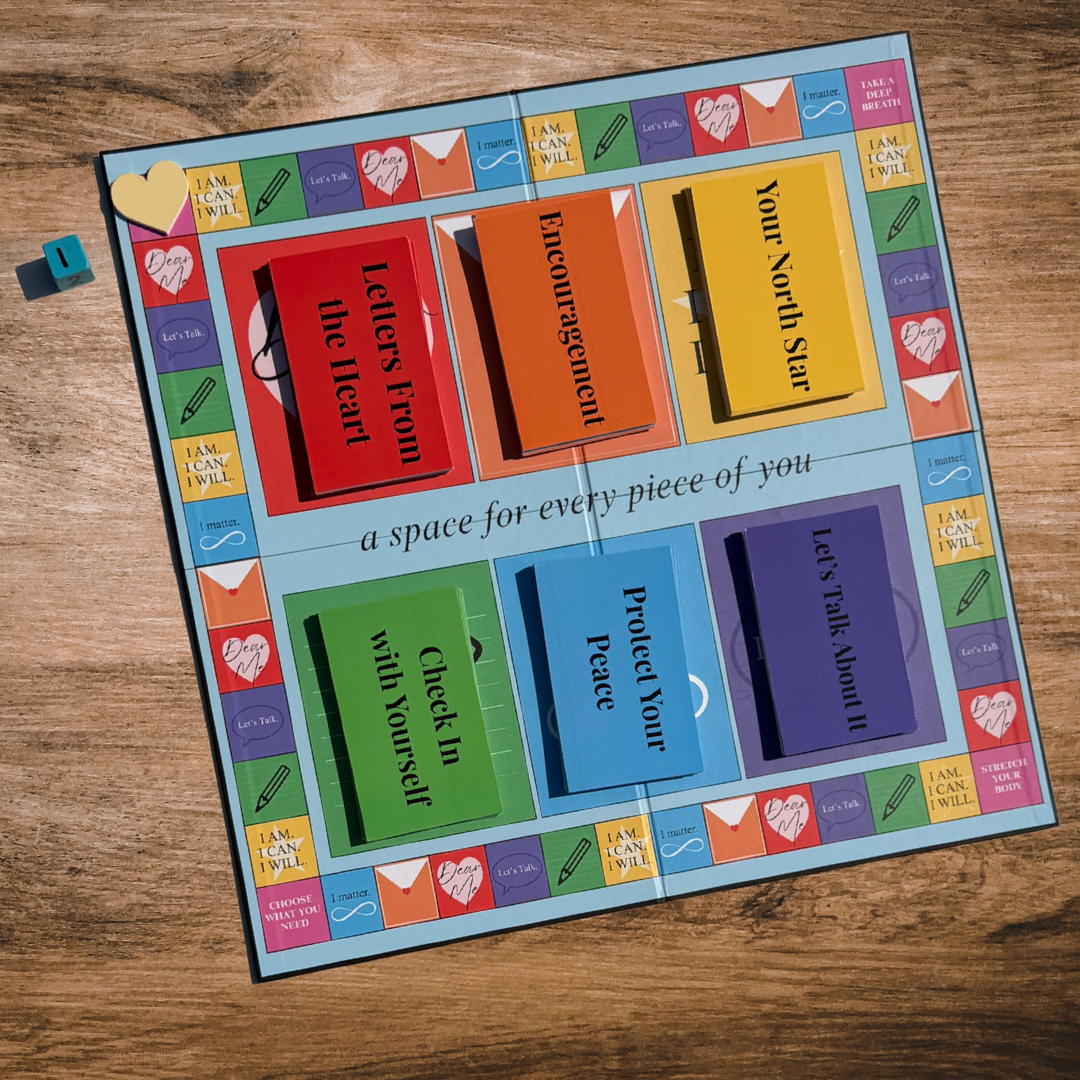
Pieces of You™ is more than a board game; it’s an opportunity for every individual at the table to discover a tool that supports their inner journey. The game contains 6 categories filled with different prompts that invite you to write a letter to yourself, make a card for someone else, write down a value or goal, do a journal prompt, share a self-care or boundary out loud, or lead a group discussion. Each category touches on both different themes and different approaches to exploration.
The Guided Edition is designed for treatment centers, therapy groups, and mental health programs. It combines structured prompts with interactive activities to increase engagement, participation, and peer connection in group settings. It’s the group activity that is actually meant for every member of the group.
This game can be incorporated into a variety of settings, including, but not limited to:
therapy groups
counseling sessions
individual reflection
structured therapeutic activities
Recommended Ages 16+
Learn More: Pieces of You: The Guided Edition — Francesca Reicherter
Product Ships in 4-6 weeks!
© 2026 Pieces of You — All rights reserved. TM Pieces of You™ — Pending USPTO registration.
Disclaimer: Pieces of You™ is a reflective and discussion-based board game designed to foster self-expression, connection, and personal insight. It is not a form of therapy, treatment, or clinical intervention and is not intended to replace professional mental health care. The game was created by a facilitator, not a licensed therapist, and should only be used as a therapeutic tool under the guidance of a licensed mental health professional. Players should use the game at their own discretion and seek professional support if needed.